
Cash Flow Modeling for Real Estate
Practical Excel seminar for the valuation, financing, and analysis of real estate projects.
Überblick
Develop comprehensive cash flow models in Excel – from acquisition and construction through leasing and financing to exit. Analyze returns, debt service capacity, and risks, and learn how to use AI effectively for financial modeling and model auditing.
We offer the seminar as an exclusive in-house training session for your entire team, either in person or online, as well as an open online seminar. The next online seminar with Prof. Dr. Christian Tallau will take place on November 23–24, 2026.
Training Objectives
The seminar enables participants to build robust cash flow models for real estate projects and use them as a reliable basis for investment and financing decisions.
Der Fokus liegt auf:
- practical Excel-based modeling techniques
- assessing profitability of real estate development projects and investments
- structuring and optimizing financing structures for real estate investments
- analysis of key project risks, including construction costs, occupancy, rental growth, and exit assumptions
- strategic use of AI – from data import to model audit
- hands-on implementation using realistic real estate case studies
Für wen ist das Seminar geeignet?
Das Seminar richtet sich an:
- real estate developers
- Real estate investors, asset managers, and family offices
- credit analysts and financing specialists in financial institutions
Practical Relevance & Added Value
You will gain practical knowledge, models, and methods that you can apply directly in your work.
- Ready-to-use models: You will receive professional Excel models that you can use as a foundation for your own projects.
- Your Own Practical Application at the Core: Bring specific questions from your day-to-day work and apply what you learn directly to your own practice.
- Work More Efficiently with AI: Learn how to use AI effectively to complete recurring tasks faster and accelerate your analyses.
- Long-Term Value: The methods, models, and workflows will remain available to you as practical tools for your work long after the seminar.
A typical use case: structuring a large residential real estate project with a construction phase, debt financing, financial covenants, and a sales scenario — including an analysis of the impact on IRR and DSCR.
Do You Still Need Cash Flow Modeling If AI Builds the Models?
Yes — more than ever!
Today, AI can read rent rolls, write formulas, and even build entire models. But you still need to be able to assess whether a model is conceptually correct and whether cash flows, debt service, and other key elements are accurately represented.
In the seminar, you will learn both: how to develop models that you can understand and apply, and how to use AI effectively — based on the SUBAAC Framework developed by the Institut für Kreditanalyse. To put this into practice, we use available tools such as Claude, ChatGPT for Excel, and Microsoft Copilot.
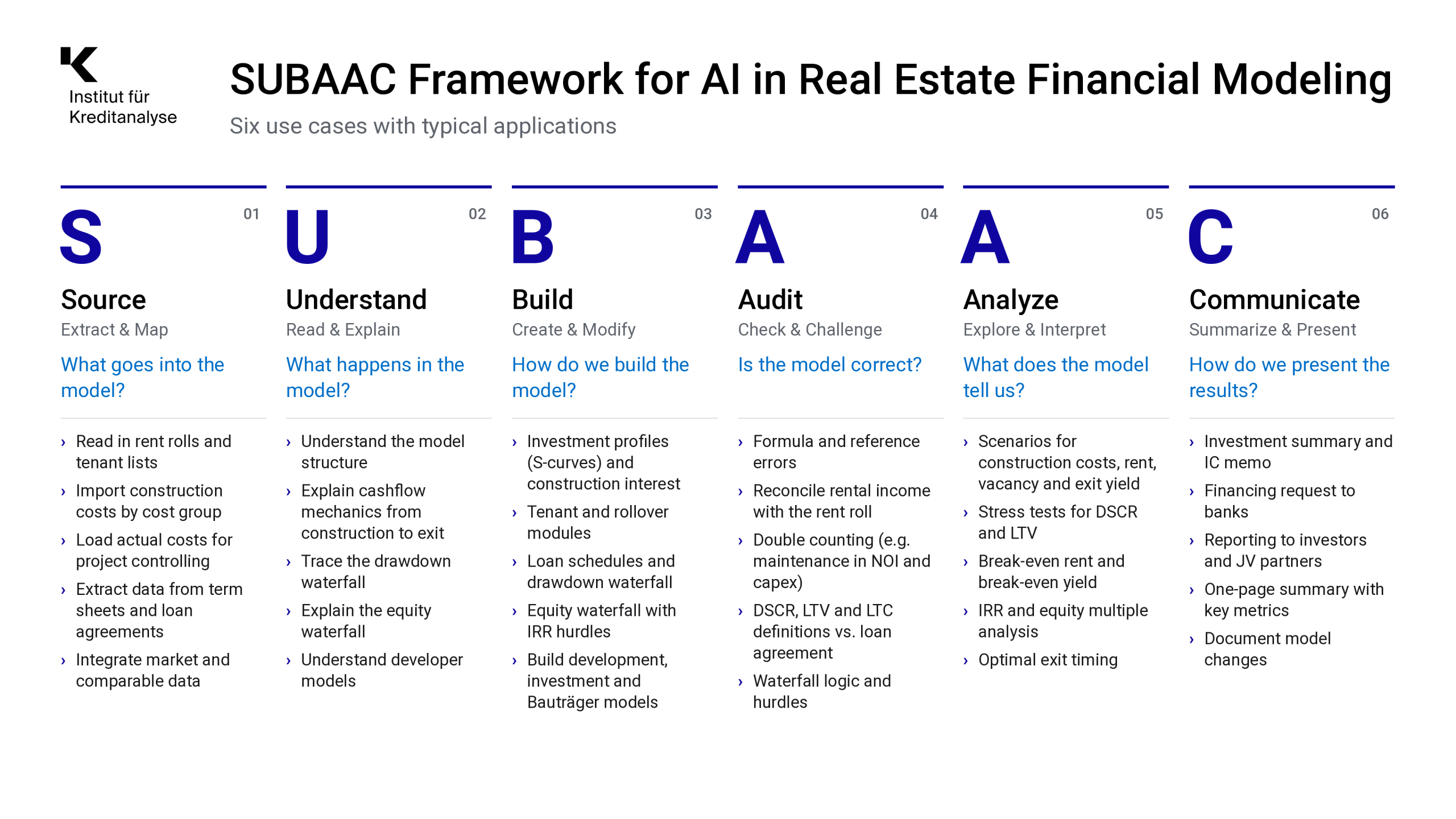
What you will learn in the “Cash Flow Modeling for Real Estate” seminar:
The seminar covers all key components of professional real estate cash flow modeling — from fundamental model architecture to advanced financing and risk analysis topics.
The training is highly practical and implementation-focused: Using case studies of residential and commercial real estate, complete real estate cash flow models are built and analyzed step by step directly in Excel.
The models you develop during the training are provided for your continued use as a basis for your own projects.
The seminar is based on our IfK modular modeling framework, which has been successfully applied in numerous real estate financing projects.
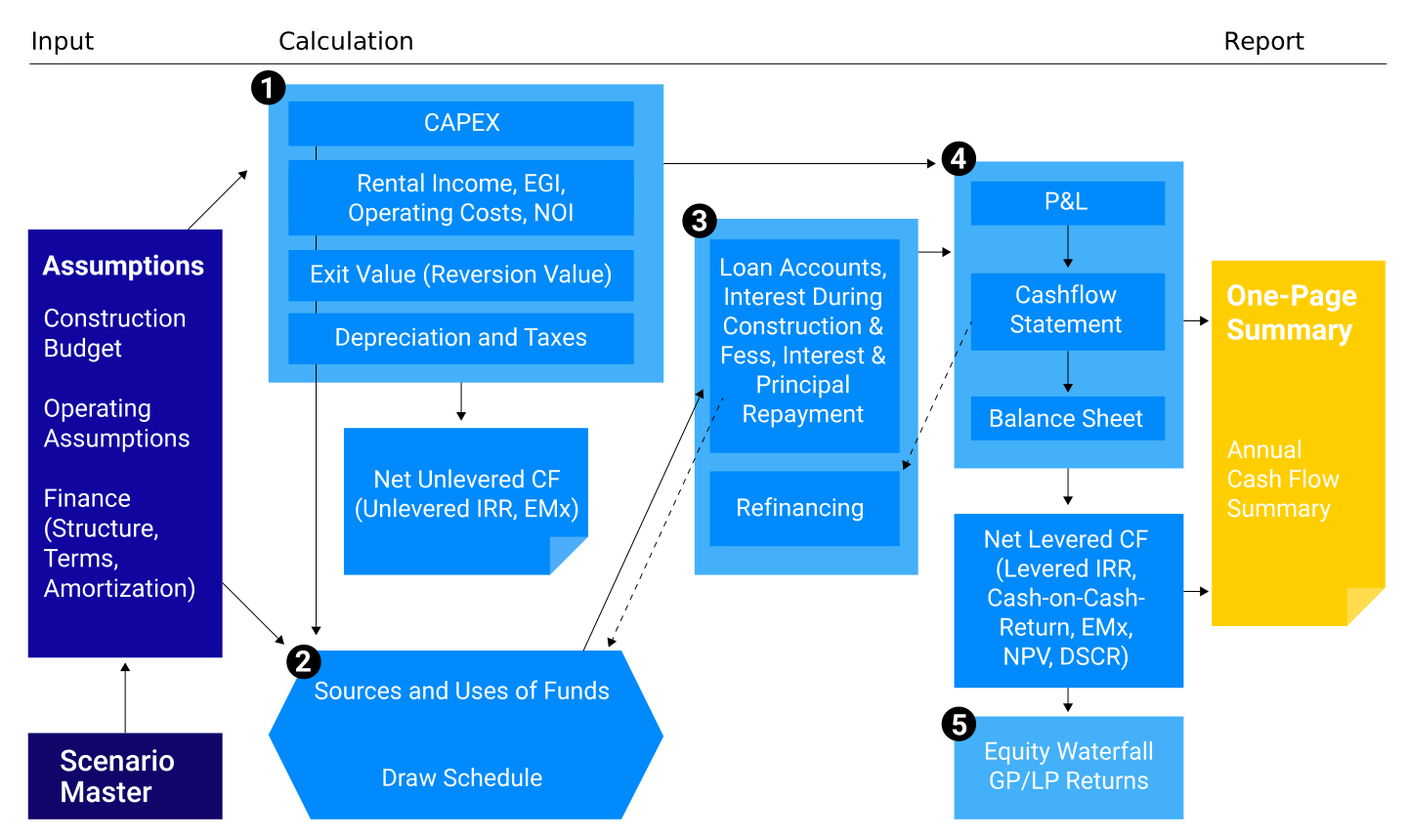
Program
Optional: Modeling Advisory
For project-specific requirements, we offer tailored Modeling Advisory services, providing expert support in developing and optimizing financial models for real estate projects.
Model Examples
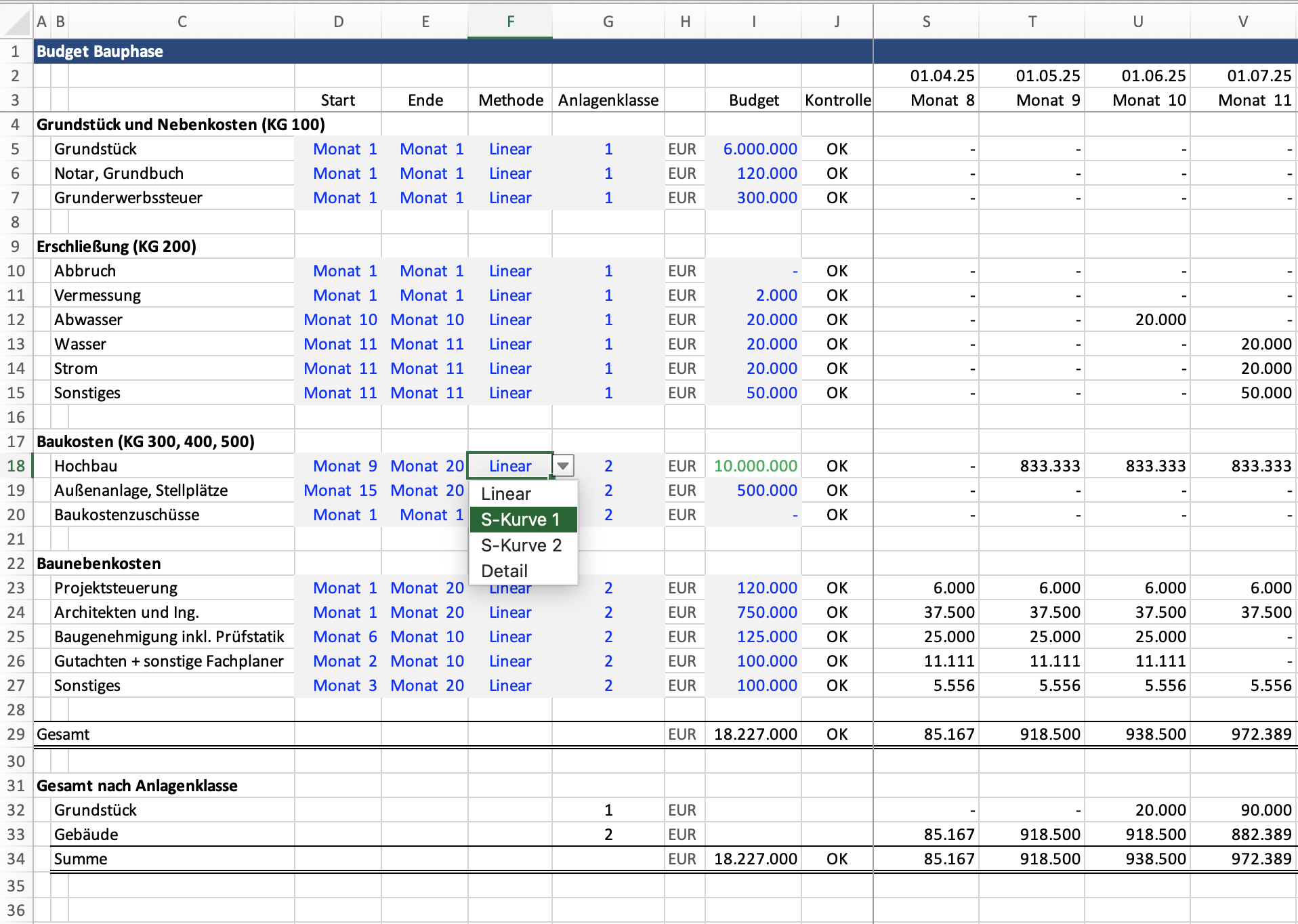
Modeling the acquisition and construction phase with flexible cash flow profiles
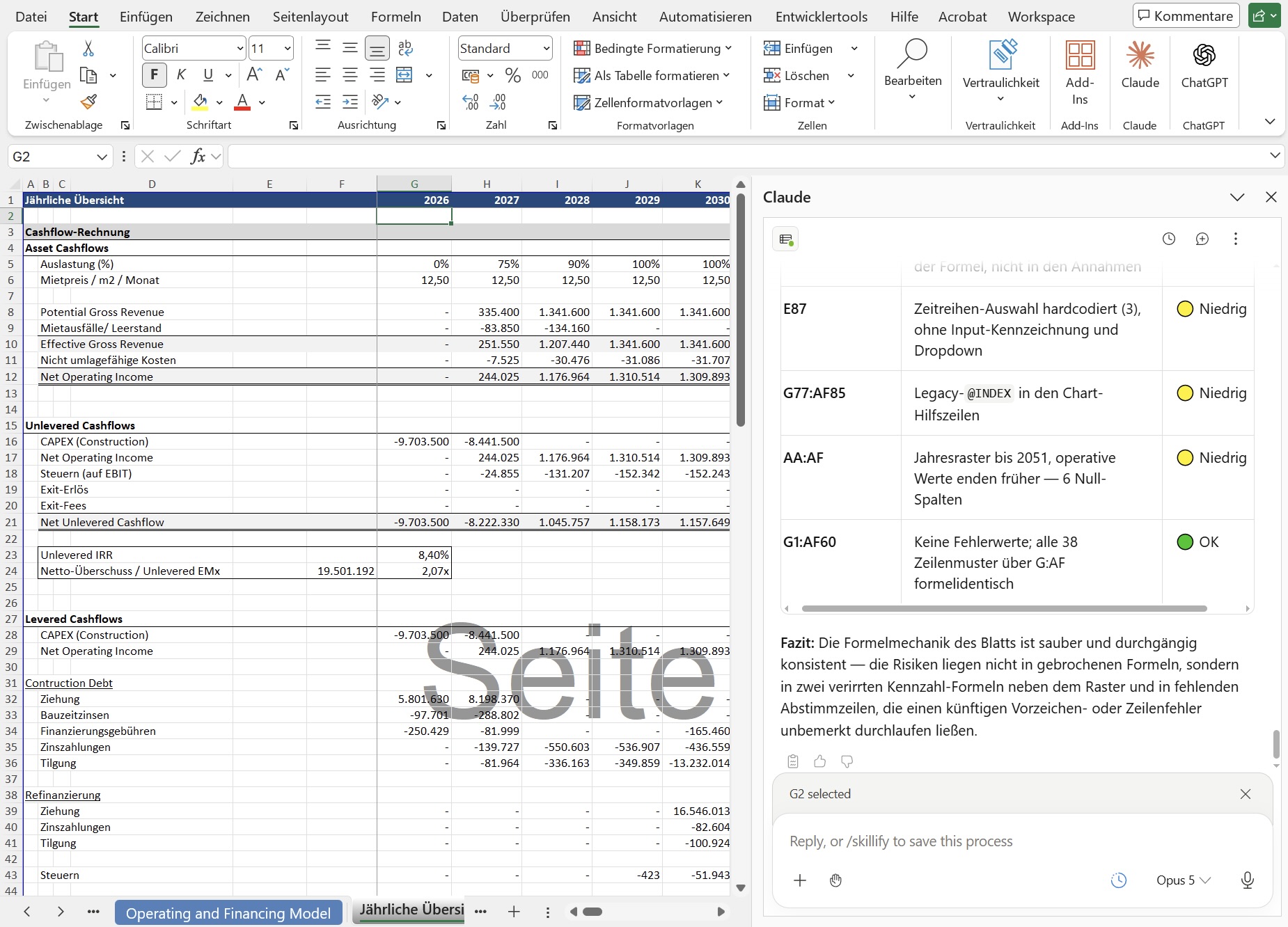
AI-assisted model audit
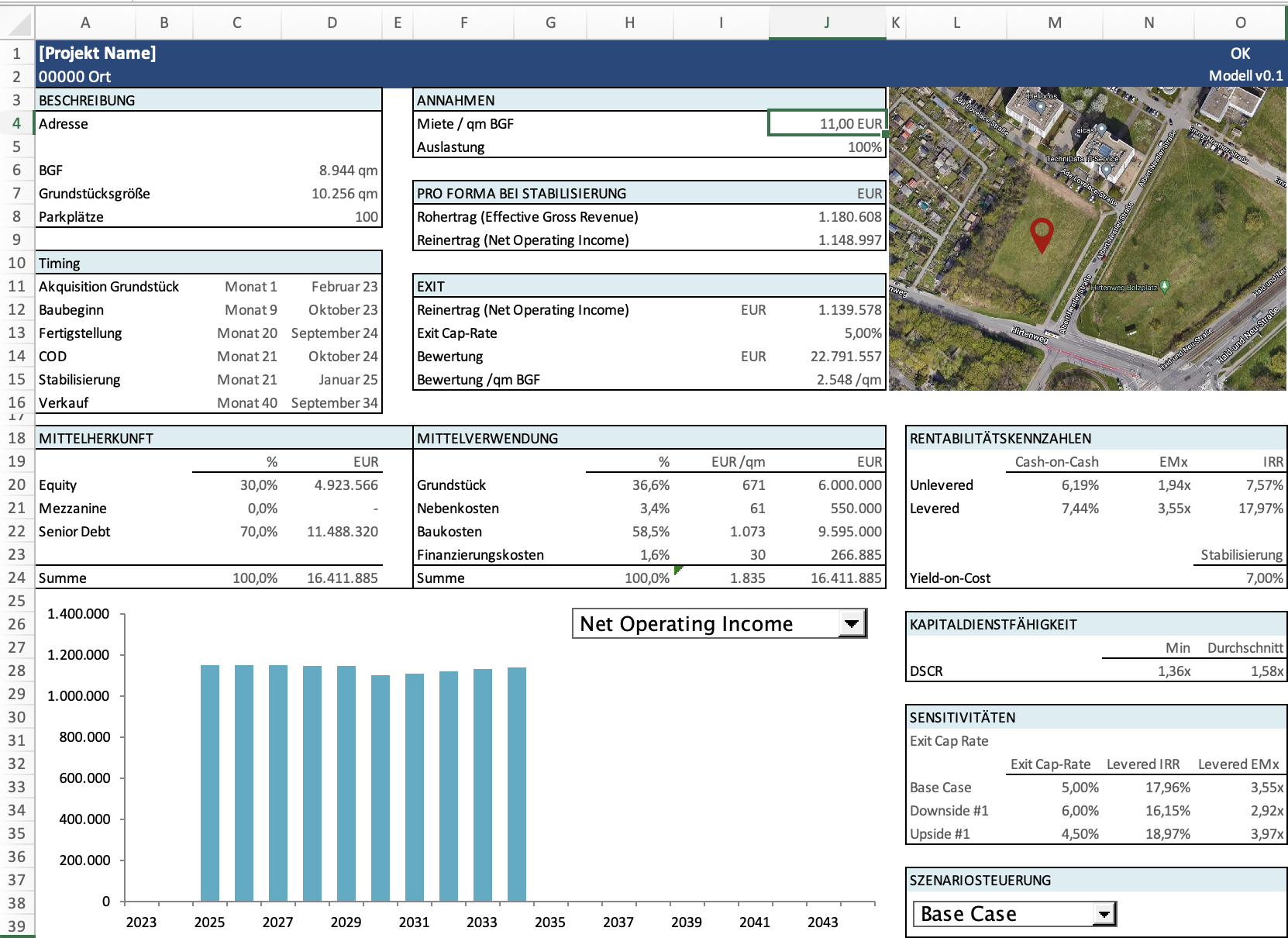
One-page management summary with key metrics and scenarios
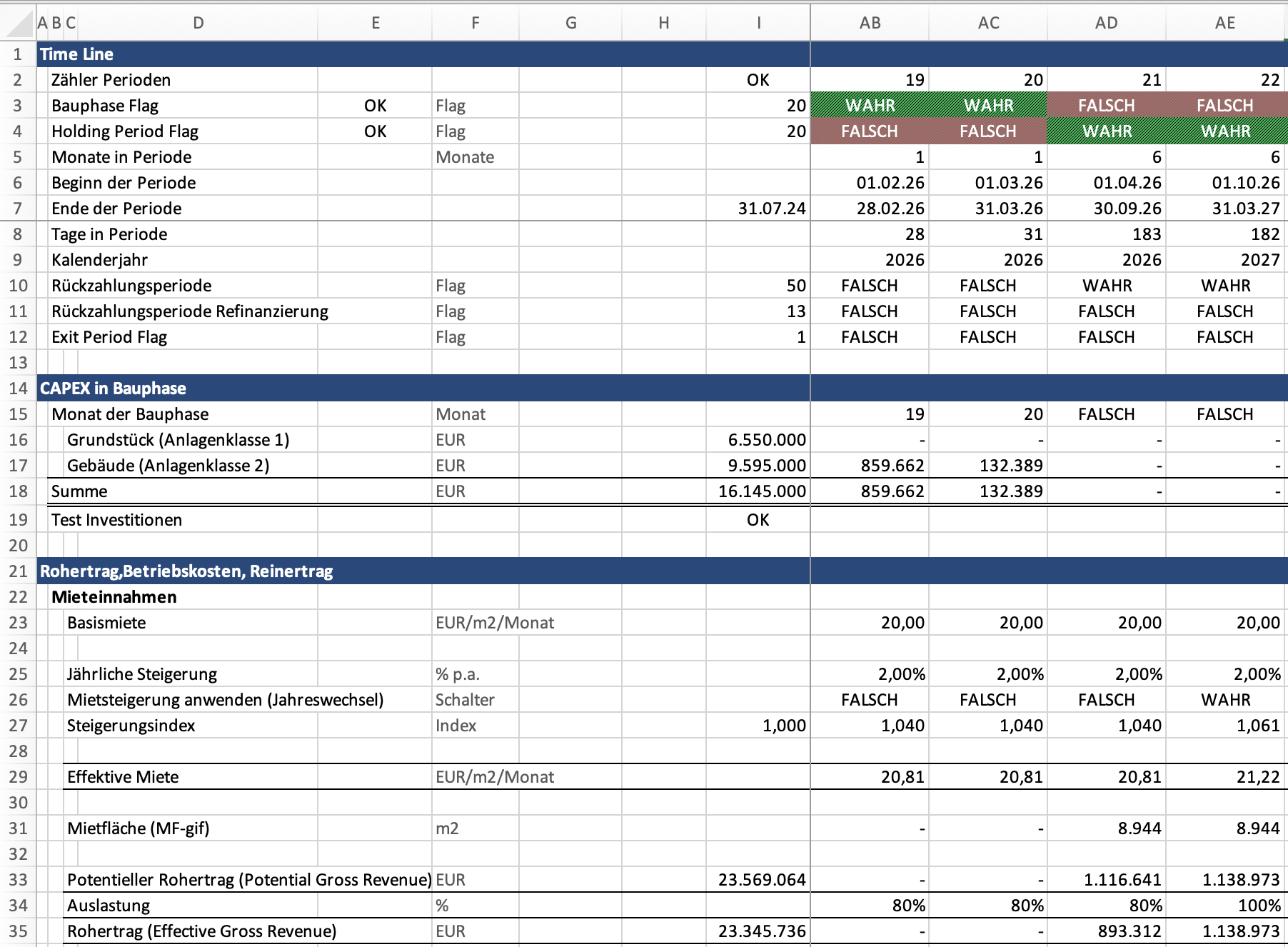
Clearly structured model with a flexible timeline
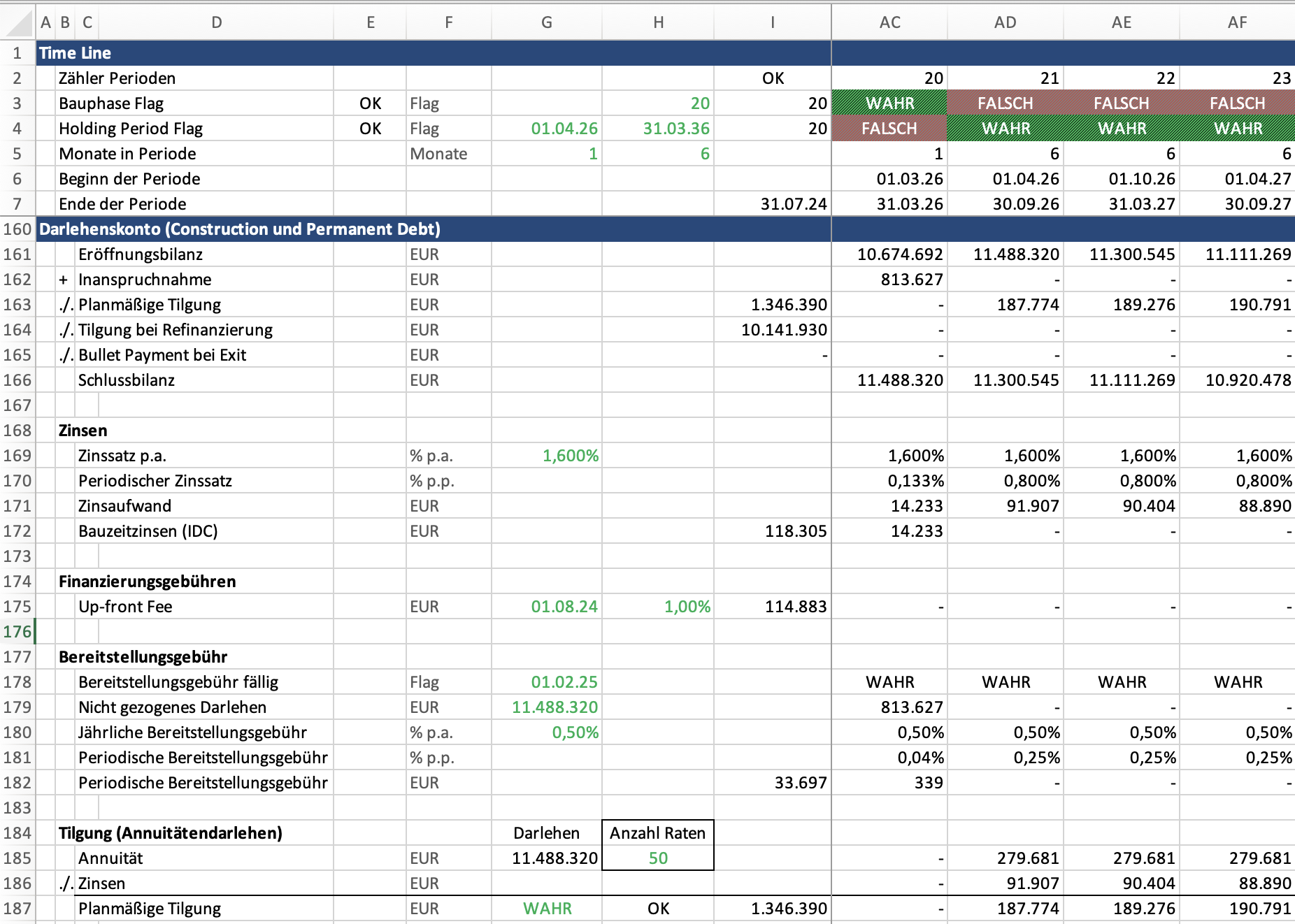
Modeling individual loan accounts
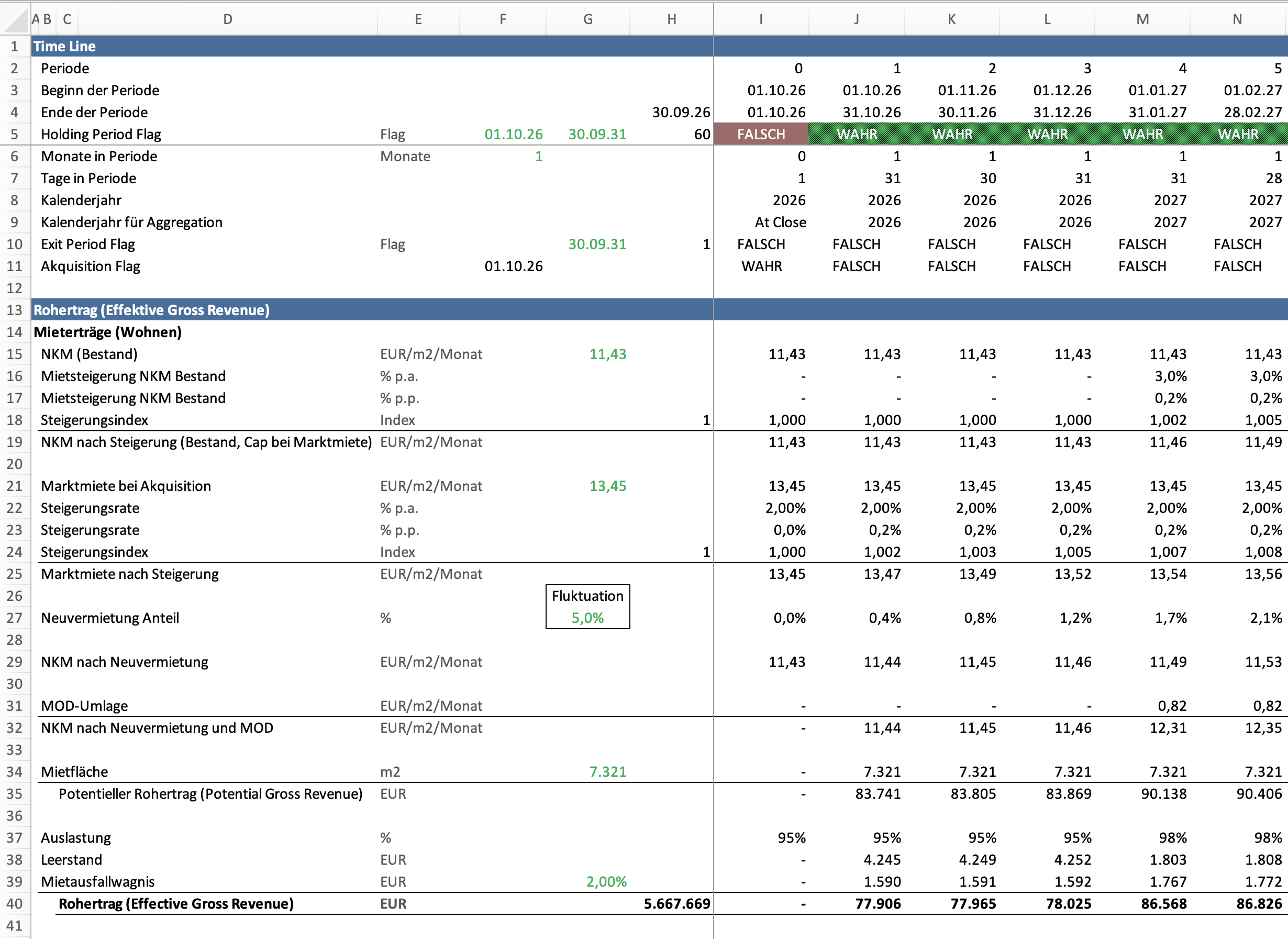
Modeling rental income in an acquisition model
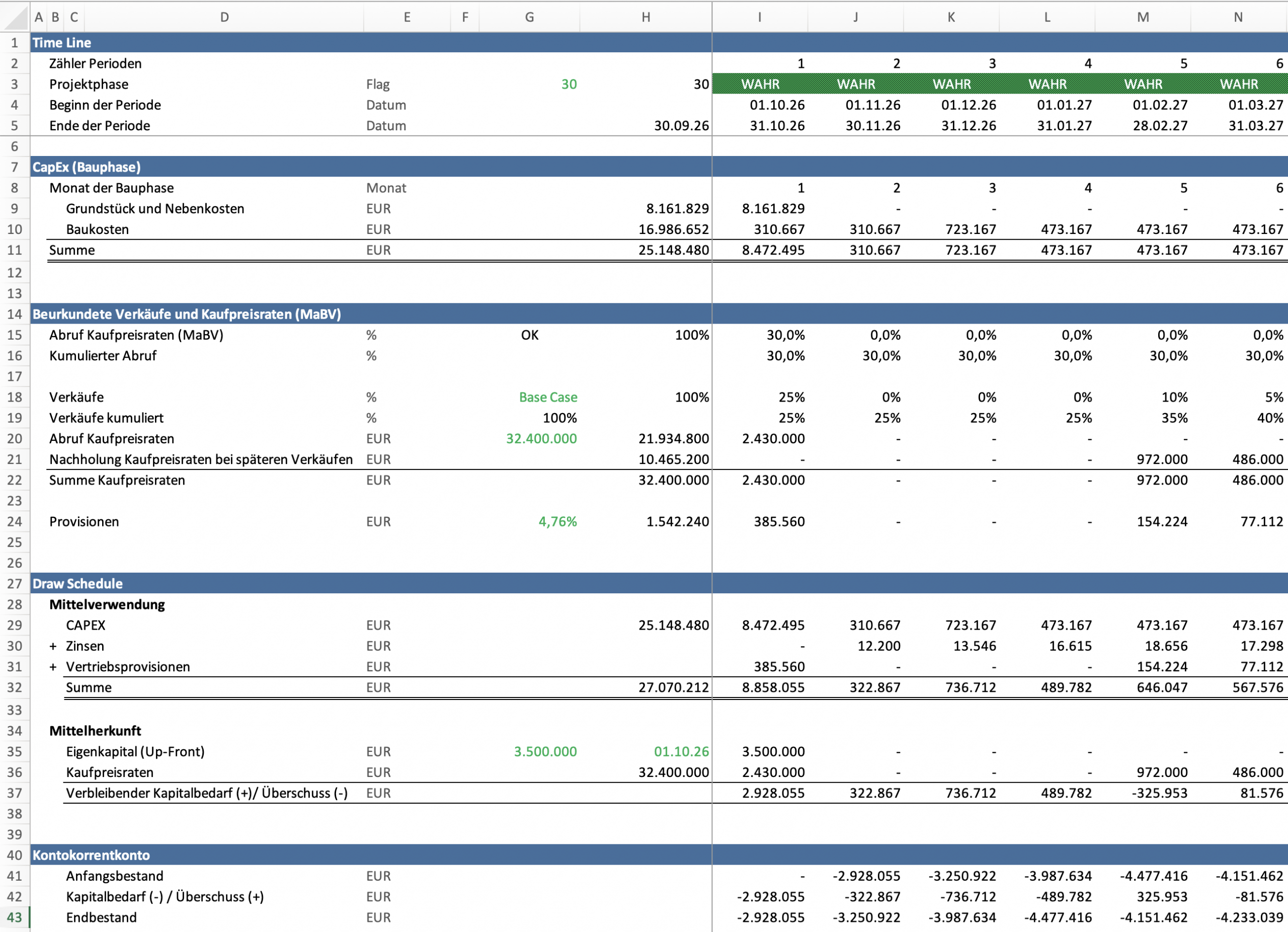
Modeling MaBV progress payments in a developer model
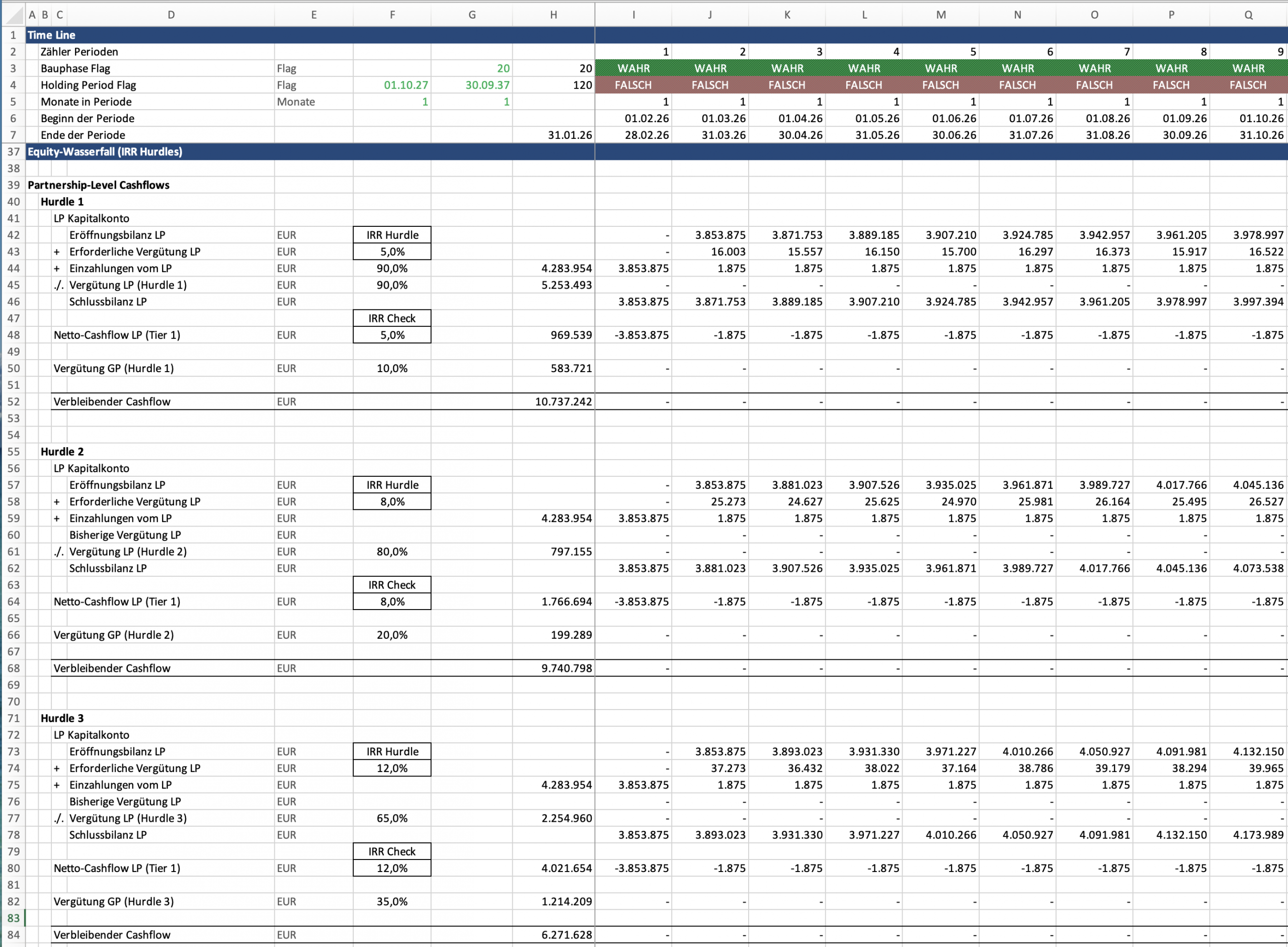
Equity waterfall with IRR hurdle rates
Your Expert: Prof. Dr. Christian Tallau
Professor Tallau has more than 25 years of experience in finance, real estate, and financial modeling. He worked as a management consultant at McKinsey & Company and held senior operational leadership positions within the Bilfinger Berger Group. In addition to his professorship, he advises banks, asset management firms, and real estate companies. an der FH Münster, Direktor des Instituts für Kreditanalyse und Geschäftsführer der Quantil GmbH.
Professor Tallau hat über 25 Jahre Erfahrung im Bereich Finanzierung, Immobilien und Financial Modeling. Er war als Unternehmensberater bei McKinsey & Company tätig und hatte operative Führungspositionen im Bilfinger Berger Konzern inne. Neben seiner Professur ist er als Berater für Banken, Asset-Management- und Immobilienunternehmen tätig.

Two Days – Two Learning Levels
Our open seminar is structured in two modules. You can book Day 1 separately or combine both days into a comprehensive learning program.
Day 1 – Intensive Fundamentals: Real Estate Financial Modeling
23. November 2026 · 9:00–17:00 Uhr · 1280 € zzgl. MwSt.
Build the foundation for professional financial modeling: develop cash flow models in Excel, value real estate projects, and analyze financing, returns, and risks.
Day 2 – Advanced Modeling & AI
24. November 2026 · 9:00–16:00 Uhr · 980 € zzgl. MwSt.
Deepen your financial modeling skills, work through challenging real-world cases, and learn how to use AI effectively for modeling, analysis, and model auditing.
Frequently Asked Questions (FAQ)
What is cash flow modeling for real estate?
Real estate cash flow modeling is the structured projection of all cash inflows and outflows of a real estate project over its entire lifecycle. A professional real estate cash flow model includes acquisition and construction costs, rental income, operating expenses, financing structures, taxes, and potential exit proceeds. The objective is to transparently assess project profitability, liquidity development, and debt service capacity, providing a reliable basis for investment and financing decisions.
What is a cash flow model used for in real estate projects?
A real estate cash flow model serves as the central analytical tool for evaluating development and investment projects. It supports investment and acquisition decisions, helps structure and optimize financing solutions, allows analysis of project profitability and risks, and shows how changes in assumptions affect returns and liquidity. Cash flow models also function as essential communication tools when working with banks, investors, and project partners.
How does cash flow modeling differ from traditional real estate calculations?
Traditional real estate calculations often rely on static metrics or simplified yield calculations. Cash flow modeling instead analyzes project cash flows period by period across the entire project lifecycle, covering construction, operations, financing, and exit. This enables dynamic analysis of liquidity, financing effects, and risk scenarios, providing a much more robust basis for investment and financing decisions.
Who should attend this training?
The seminar is designed for professionals involved in real estate investments and project financing, including real estate developers, investors, asset managers, family offices, financing institutions, and other professionals who are involved in real estate investments. Anyone seeking to evaluate real estate projects using professional financial models will benefit from the seminar.
Which property types are covered in the training?
The seminar addresses both residential and commercial real estate projects, including office, retail, logistics, and mixed-use properties. Both single-tenant and multi-tenant investment structures are considered.
Will participants work with a specific Excel model?
Yes. During the seminar, complete Excel cash flow models for real estate are built and explained step by step. Different models for different project types and business models are also discussed.
Will I receive the Excel models developed during the seminar for my own use?
Yes. You will receive all Excel cash flow models presented during the seminar, along with additional supporting materials. You can then use the models as a foundation for your own real estate projects and adapt them to your specific requirements.
Is the training suitable for beginners in financial modeling?
Yes. The seminar is structured so that both beginners and experienced professionals benefit. No advanced modeling knowledge is required. The modeling approach is taught step by step using practical examples, while also covering professional best practices for efficient model construction.
What Excel skills are required?
Basic Excel knowledge, such as using simple formulas, is sufficient. The seminar focuses on financial modeling logic rather than Excel mechanics, and more advanced functions are explained and applied during the sessions.
Which financial metrics are covered in the seminar?
Participants learn how to calculate and interpret key financial metrics for real estate investments and financing decisions, including internal rate of return (IRR), net present value (NPV), equity multiple (EMx), cash-on-cash return, capitalization rates, debt service coverage ratios (DSCR), and loan-to-value/ loan-to-cost (LTV/LTC) measures. All metrics are implemented and analyzed directly within the Excel cash flow model.
Are financing structures modeled in the training?
Yes. Modeling financing structures is a central part of the seminar. Participants learn how to structure equity, senior debt, and mezzanine financing, as well as interest and repayment profiles. Joint venture structures and layered financing solutions are also discussed, together with analysis of their impact on project cash flows and investor returns.
Will the seminar also cover the use of AI for financial modeling?
Yes. AI is integrated into the individual modules. We work with the SUBAAC Framework developed by the Institut für Kreditanalyse, which distinguishes six areas of application: importing data (e.g. rent rolls), understanding models, building models, auditing models, analyzing results, and communicating results. Equally important is understanding where AI can make mistakes and how to verify AI-generated results within the model.
Can AI create a real estate cash flow model in Excel?
To some extent, yes. AI tools such as Claude in Excel and Microsoft Copilot can write formulas, add modules, and even build entire models. However, you still need to be able to assess whether financing waterfalls, construction-period interest, or equity waterfalls are modeled correctly from a technical perspective. In the seminar, you will learn how to use AI effectively when building models and how to verify the results.
Which AI tools are used in the seminar?
We work with tools that many professionals already use in their day-to-day work: Claude, ChatGPT, and Microsoft Copilot. All of these tools can be used directly in Excel, allowing AI to work within your cash flow model. ChatGPT for Excel is now available across all plans, including Free and Go, although usage is limited on those plans. No programming skills or specialized technical knowledge are required — you simply give instructions in plain language. No prior experience with AI is required.
Does the seminar address the perspective of financing banks?
Yes. The seminar explicitly takes into account the perspective of financing banks. We have many years of experience in developing risk classification systems for banks. The seminar explains which assumptions and key metrics are relevant for lending decisions and how cash flow models can be used to transparently present risks, debt service capacity, and financing structures.
How does the seminar support discussions with banks or investors?
The seminar demonstrates how financial models can serve as professional decision-making and communication tools. Participants learn how to present assumptions, risks, and financial results clearly and convincingly, thereby strengthening credibility and confidence in financing and investment negotiations.
Can I bring questions from my own company?
Absolutely. The seminar is designed with a strong practical focus and provides ample opportunity to discuss individual questions. You are welcome to bring specific challenges or use cases from your professional environment. This allows you to benefit from practical solutions that can be applied directly to your own projects.
Can the seminar also be offered as in-house training?
Yes. The seminar is frequently conducted as in-house training and can be tailored to specific property types, company processes, or internal modeling standards. Interested organizations can contact us to receive a customized training proposal.
Will I receive a certificate?
Yes. On successful completion you will receive a certificate from the Institut für Kreditanalyse documenting your participation and the content covered.
